
What is Tactile Printing?
How raised and textured print turns a flat graphic into something people can see, feel and experience.
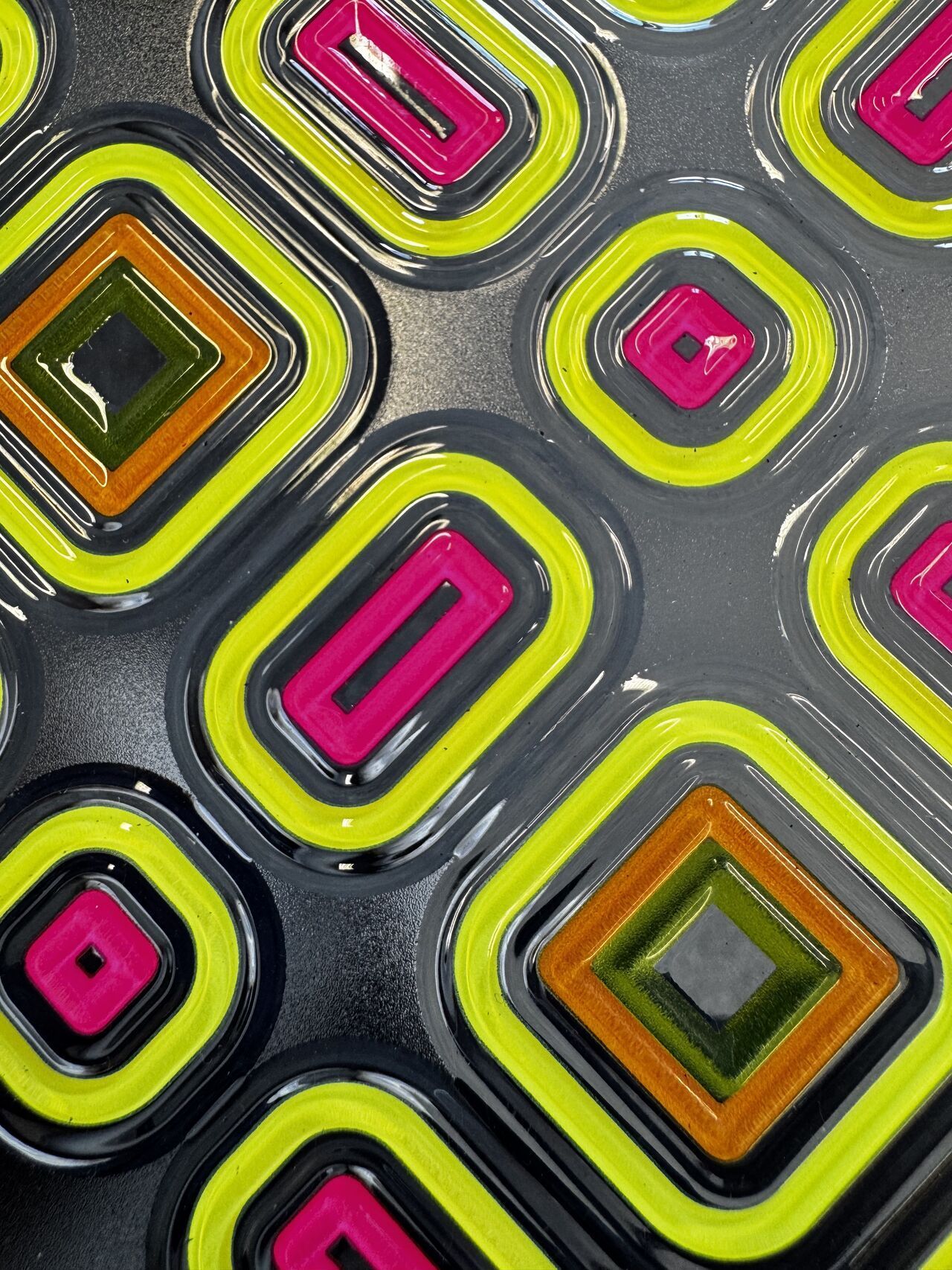
Tactile printing is a specialist print process that adds physical texture, depth and raised detail to a printed surface, creating something that can be both seen and felt.
Rather than relying solely on colour and imagery, tactile print uses precisely controlled layers of ink or varnish to build selected areas above the surface. The result can reproduce textures, create raised lettering and patterns, highlight design details or transform a conventional printed graphic into a more sensory experience.
At Sensory Works, we use tactile printing as part of a wider approach to sensory and specialist print — helping brands, designers, artists and creative teams create physical experiences that encourage people to stop, look and touch.
How does tactile printing work?
Tactile UV printing builds controlled layers of UV-cured ink or varnish onto a substrate.
A digital artwork file identifies the areas that need additional height or texture. These areas are then built through multiple precisely registered print layers until the required relief is achieved.
The process allows different areas of the same image to have different heights and textures. Fine detail can remain subtle while other elements can be much more pronounced.
Once the tactile structure has been created, colour, white and finishing layers can be added to produce the final appearance.
Because the effect is created digitally, tactile print can produce complex textures and variable heights without the traditional dies, moulds or tooling associated with processes such as embossing.
What can tactile printing recreate?
One of the most exciting aspects of tactile printing is the variety of surfaces and effects that can be interpreted through print.
These can include:
- Paint and visible brushstrokes
- Wood grain
- Stone and concrete
- Brick and architectural surfaces
- Fabric and woven textures
- Leather effects
- Raised patterns and graphics
- Lettering and logos
- Decorative surface details
- Artwork and photographic textures
The objective is not always to reproduce a material literally. Texture can also be used creatively to emphasise particular elements within a design and guide where someone looks or touches.
How high can tactile print be?
The amount of relief depends on the artwork, substrate, application and production method.
Sensory Works can create subtle surface textures as well as much more pronounced raised effects, with selected applications reaching approximately
3mm of physical depth.
Greater height is not automatically better. Often the most effective tactile result comes from varying the height across an image so the printed surface responds naturally to the underlying design.
For this reason, we look at the experience you want to create before determining how the tactile layers should be constructed.
Tactile printing vs embossing
Although both processes create something that can be physically felt, tactile UV printing and traditional embossing work differently.
Embossing mechanically presses a design into or out of a material using manufactured dies. This can produce excellent results but requires tooling and is generally associated with predetermined shapes and areas.
Digital tactile printing builds the effect directly onto the printed surface.
This makes it possible to create complex textures, variable heights and highly detailed effects without manufacturing a physical embossing die. It also opens tactile effects to applications and formats that can be difficult to achieve using conventional embossing.
Where can tactile printing be used?
Retail and visual merchandising
Retail is particularly suited to tactile print because physical stores have an opportunity that digital channels do not — customers can physically interact with what they see.
Tactile graphics can be incorporated into point-of-sale displays, launch campaigns, window displays, branded environments and experiential installations.
Texture gives customers another reason to stop and engage with a display.
Luxury packaging
Packaging can communicate quality before the product itself has even been opened.
Raised patterns, logos, lettering and surface details can add another dimension to premium packaging and help create a more memorable physical experience.
Beauty and fragrance
Beauty is inherently sensory.
Tactile printing can introduce raised details, product textures and decorative effects into displays, promotional graphics and packaging.
It can also be combined with other sensory print processes, including fragrance printing, metallic effects and specialist finishes.
Interiors and hospitality
Tactile printing can transform decorative graphics into physical surfaces for hospitality, interiors and branded spaces.
It can also be combined with tactile wallpaper and other specialist surface technologies to create bespoke walls, features and decorative installations.
Fine art
Tactile printing provides artists and galleries with an alternative to conventional flat reproduction.
Surface information from an original artwork can be captured and translated into carefully mapped tactile layers, allowing brushwork, impasto and other surface characteristics to become part of the reproduction.
Sensory Works Art specialises in developing tactile fine-art editions that retain more of the physical character of the original work.
What artwork is required for tactile printing?
Good tactile printing starts with understanding which parts of an image should have physical depth.
In relatively simple designs, raised areas can be identified directly from the original artwork.
More complex images may require individual texture or height layers so different areas of the design can be independently controlled.
For artwork and highly detailed surfaces, high-resolution surface scanning can also be used to capture physical information from the original.
You do not necessarily need to supply finished tactile artwork. Sensory Works can review existing creative files, imagery or physical originals and advise on the most appropriate way to create the tactile information required for production.
What materials can be tactile printed?
Tactile UV printing can be produced across a wide variety of rigid and flexible materials depending on the application and production requirements.
Potential substrates include display boards, plastics, acrylics, specialist papers, decorative panels and other suitable printable surfaces.
Rather than specifying a single material for every project, Sensory Works considers the required appearance, environment, dimensions, durability and finishing requirements before recommending a production route.
Why use tactile printing?
Most visual communication competes for attention through colour, scale and imagery.
Tactile printing adds another dimension: touch.
It can turn a flat graphic into something people instinctively want to investigate.
For brands and creative teams, that can mean greater physical engagement with retail displays, packaging, exhibitions, interiors and promotional material.
And tactile print doesn't need to work alone. It can be combined with metallic effects, fragrance, colour-changing print, printed neon, dimensional effects and other specialist finishes to create genuinely multisensory print experiences.
Is tactile printing suitable for my project?
Possibly — but the starting point shouldn't be the printing technology.
It should be the experience you want to create.
At Sensory Works, we work with brands, agencies, designers, artists and print buyers to understand the brief first and then identify the most appropriate production method.
Sometimes that is tactile UV printing. Sometimes another specialist print process — or a combination of processes — will create a better result.
Have a project where you want people to do more than simply look?
Explore our Tactile UV & Raised Print capabilities or send us your brief and let's explore what's possible.
Frequently Asked Questions
Is tactile printing the same as 3D printing?
No. Tactile printing builds controlled raised layers onto a printable surface, whereas conventional 3D printing generally creates a three-dimensional object. Tactile printing is particularly suited to adding physical texture and relief to graphics, displays, artwork and decorative surfaces.
How thick can tactile printing be?
The achievable height depends on the artwork, substrate and production method. Sensory Works can create subtle textures through to pronounced raised effects, with selected applications reaching approximately 3 mm.
Can tactile printing reproduce an artist's brushstrokes?
Yes. With suitable artwork preparation or high-resolution surface scanning, the physical characteristics of brushwork and other surface details can be translated into tactile print layers.
Can tactile print be combined with other effects?
Yes. Tactile printing can be combined with colour, white ink, varnishes and specialist effects. Sensory Works can also explore combinations involving metallic, fragrance, neon, colour-change and other sensory print technologies.
Do I need to supply special artwork?
Not necessarily. Send us the artwork, image, design or physical piece you currently have and we can advise how the tactile information should be created.
Recent Posts

