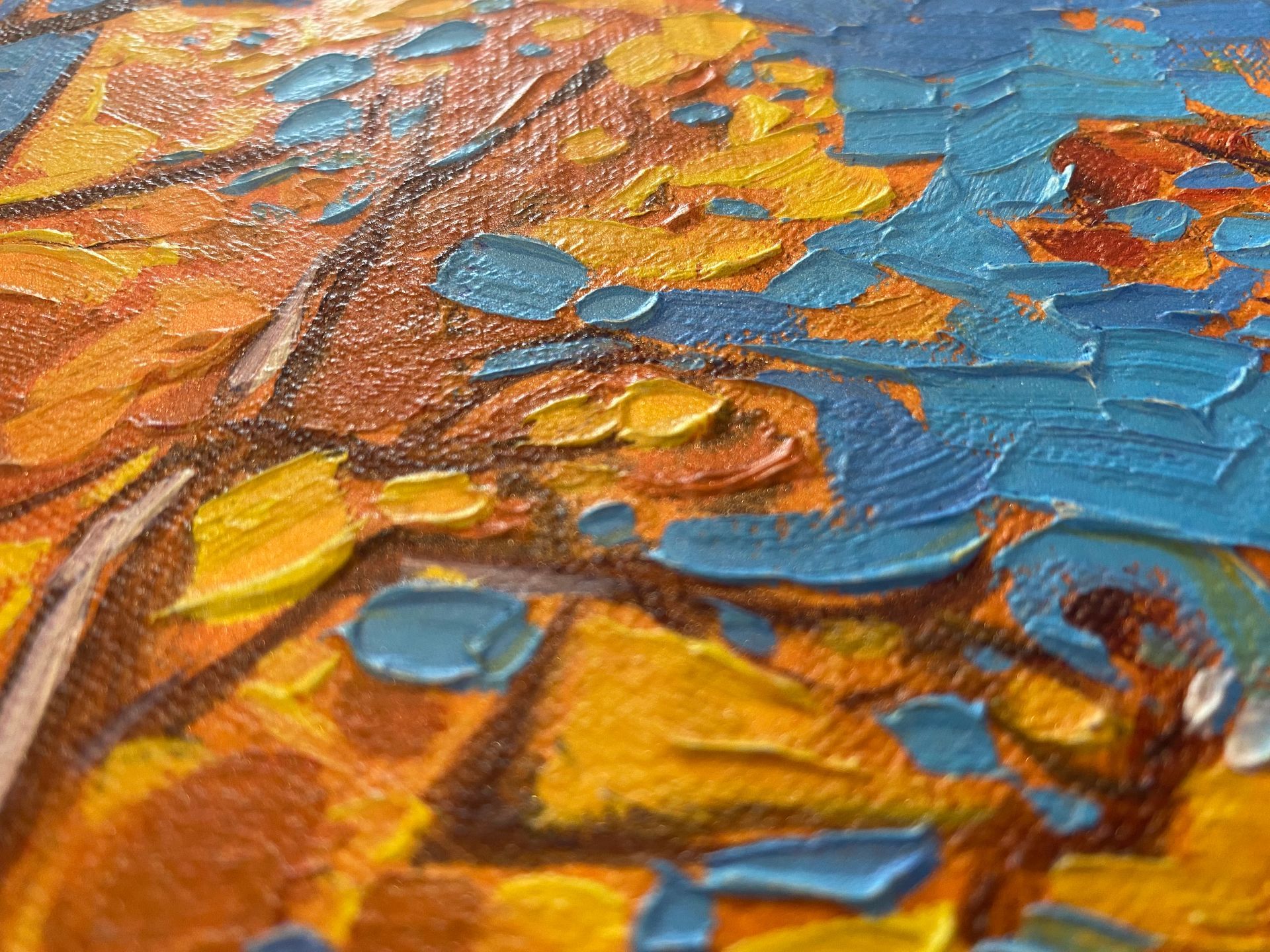
Stand close to an original oil or acrylic painting and the experience is not purely about colour. Brush strokes catch the light. Paint rises above the canvas. Some areas are smooth while others contain considerable physical structure. Move around the artwork and its appearance changes.
A conventional fine-art print can reproduce the image extremely accurately, but inevitably much of that physical information disappears.
New approaches to artwork capture and tactile digital production provide an opportunity to rethink that relationship. High-resolution scanning can record extraordinary levels of information from an original artwork. Alongside colour information, surface information can be interpreted and used to help reconstruct selected physical characteristics within a reproduction.
The objective is not to pretend that a reproduction is the original. Instead, it creates a new category of artwork positioned between the original and the conventional flat reproduction.
For an artist, this potentially creates another edition of their work. For galleries and collectors, it introduces different possibilities for display and accessibility. For hospitality, marine and interior environments, it provides an opportunity to commission highly individual pieces with a physical presence.
And for the viewer, it introduces something increasingly unusual: permission to experience artwork through touch as well as sight. That thinking sits behind Sensory Works Art.